Igloo -
Content Authoring Tool

My roles: UX designer, UI designer
Team: 1PM, 6 engineers
Research activity: Hybrid research (user interview & usability testing)
Project duration: On-going
Igloo is a digital workplace solution that facilitates asynchronous corporate communication. The platform empowers customers to create and distribute various forms of content, such as corporate news and HR policies, throughout their organization.
I was tasked with this project following the completion of the product discovery phase. As a team, our objectives included:
Potential customers place significant emphasis on the capabilities of the authoring tool when assessing a digital workplace solution. Based on the discovery research, we have identified areas for improvement in the content authoring tool.
Thanks to a successful demo at the company's annual meeting, which showcased the capabilities of the new platform, the board of directors decided to double down on their investment.
Users who heavily rely on content creation tools for their daily work often take on the role of community manager within their organization. Their responsibilities typically include:
Conversations with project managers and the examination of project documentation aided me in identifying content authors and understanding their needs. I distilled these needs into a pyramid chart to illustrate the hierarchical relationship between different levels of requirements.

By digging into the recordings of user interviews that had been conducted by the team previously, I unearthed patterns in user behavior
Having just shared the research findings with the team, I was expected to conduct another round of qualitative research. My plan was to gain further insights on:
However, we received a request from the board of directors to showcase our progress with a live platform at the company's annual meeting. With no time to spare, I needed to come up with a solution while the engineering team began working on the back-end. I discussed the situation with the project manager and UX manager, I suggested to pivot and create a user flow chart to gauge the project's complexity.
Upon reviewing the user flow chart, my concerns were confirmed: it would be impossible to have a fully functional live co-authoring tool ready for the demo in just a few weeks. I immediately shared my concerns with the product team, proposing to create some rough wireframes for a preliminary review with the engineering team.
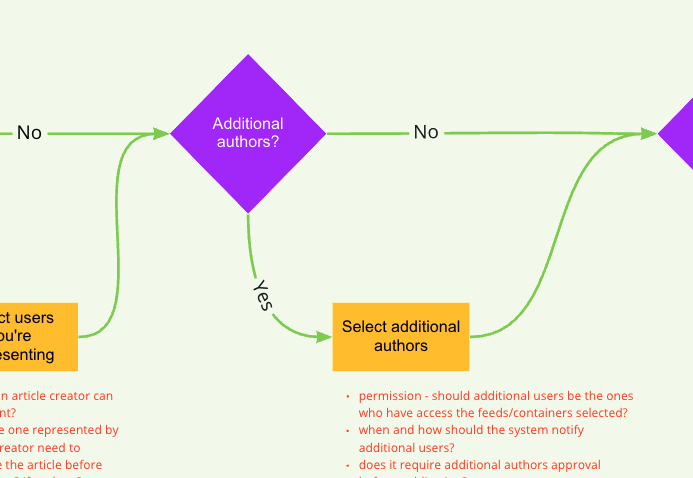
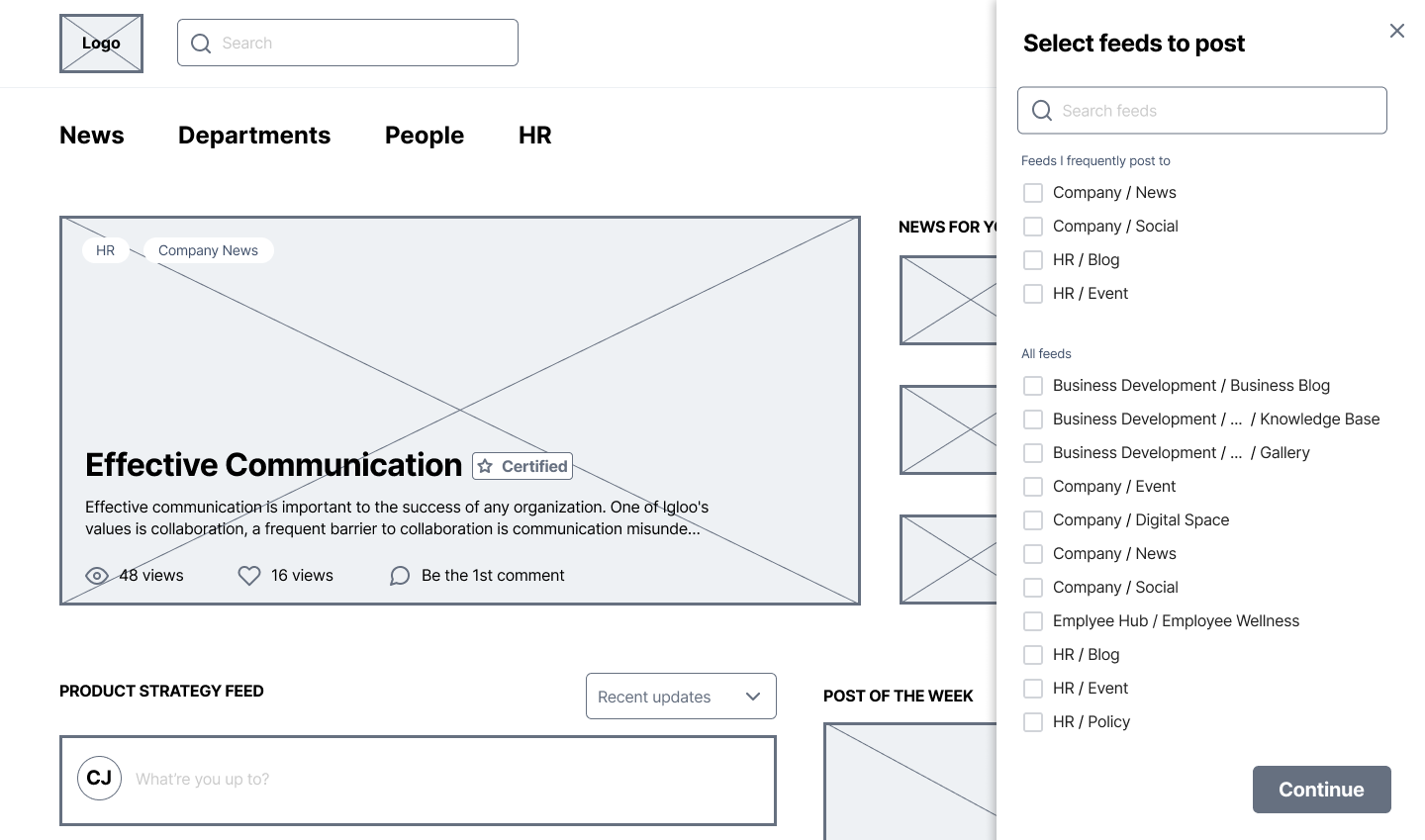
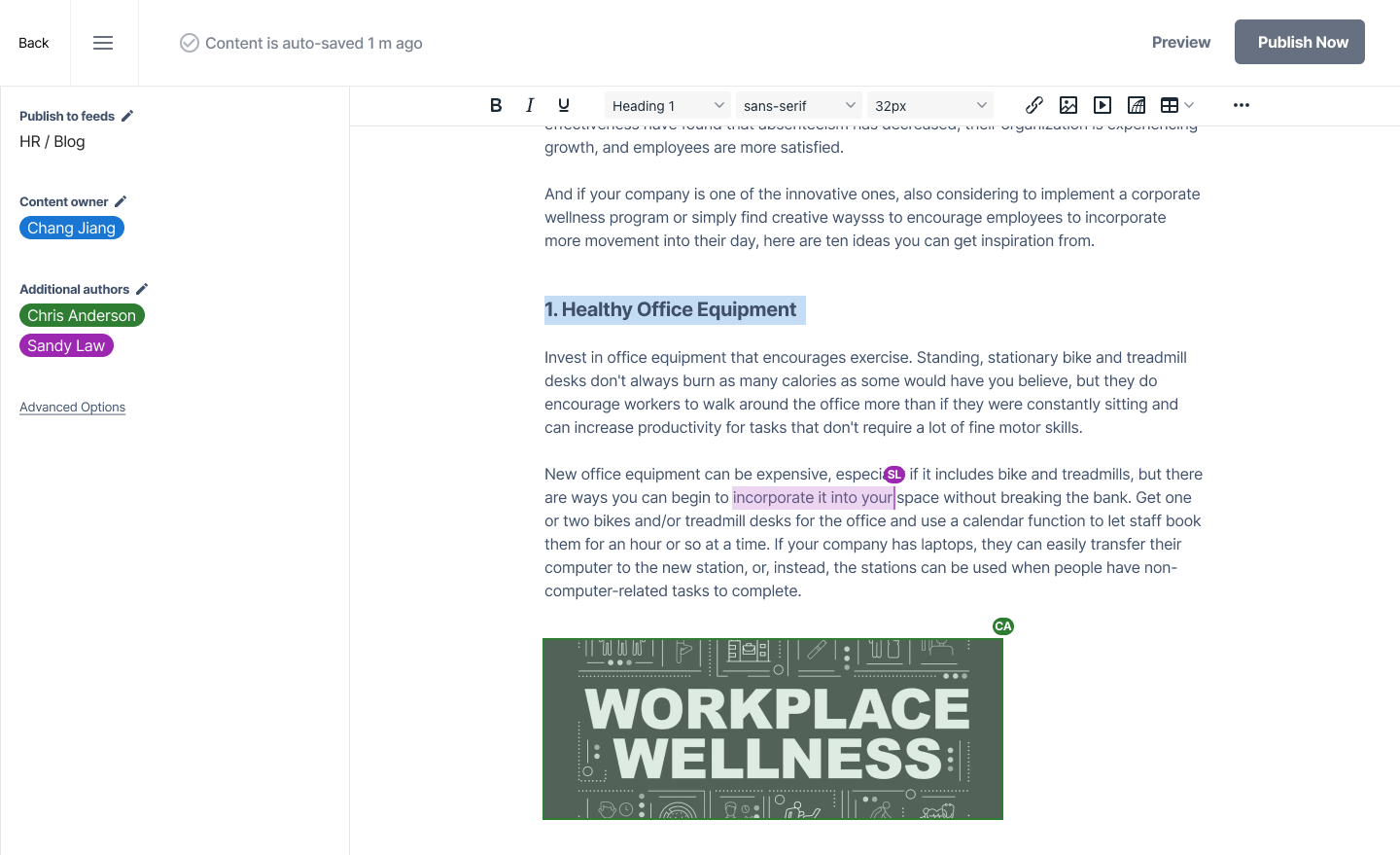
While reviewing the user flow chart, it became evident that we had a substantial list of functions to develop in order to meet the user needs identified during the discovery research. Each function could essentially be treated as an independent project. In response, I decided to take a step back and prioritize the fundamental requirement: enabling a user to invite others to collaborate on a piece of content.
After discussions with the engineering team, we reached an agreement to concentrate our efforts on delivering the end result for the demo, which was a webpage featuring content authored by multiple individuals.
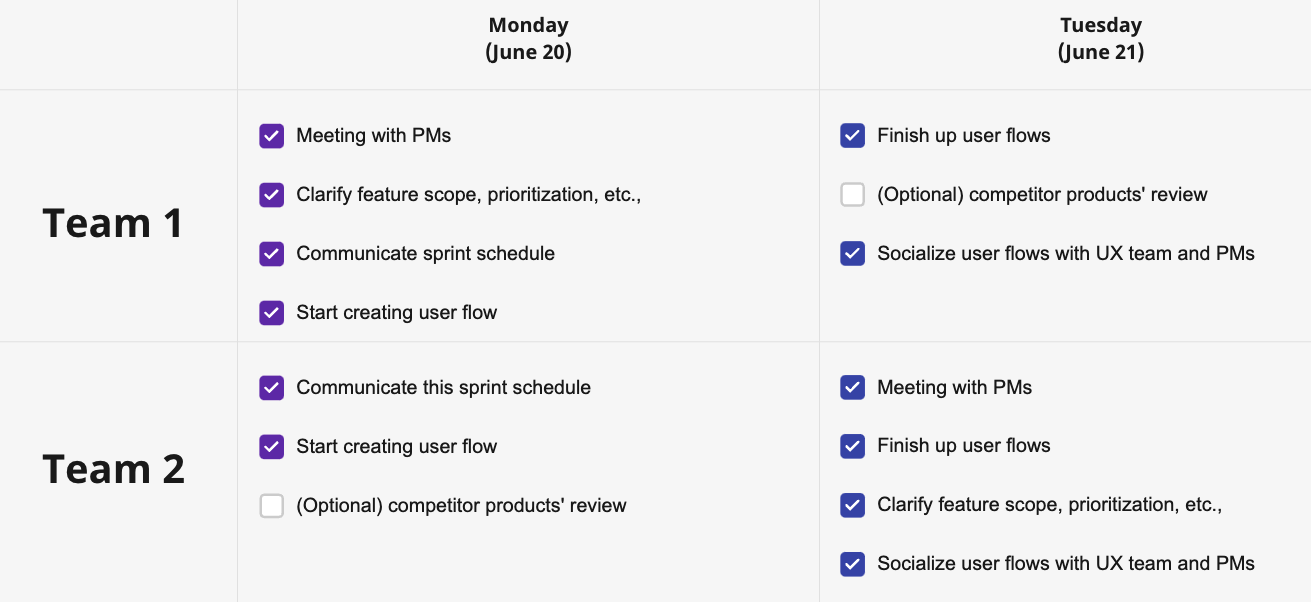
To ensure everyone was aligned, I created a schedule to keep the entire team informed and on track.
I streamlined the functions, setting aside those intended for future development. The narrative of the happy path went as follows:
'"A community manager wants to write and share an article for their employees, the user would first select the places where this article will be posted, then the user lands on the content creation page where they could invite additional authors to co-write the article. A notification will be sent to invited authors. Together, all authors will be able to edit the article simultaneously. Once it is published, readers will be presented with a page of the co-authored article.”

During our annual company meeting, the VP of Product Strategy conducted a successful live demonstration of the platform. This demonstration featured a pseudo co-authored article published on the new platform, following the narrative described earlier. While a portion of the page was hard-coded, we effectively conveyed our vision for the new platform. As a result, the board of directors responded with an additional three million dollars in investment.

Following the annual company meeting, I implemented a hybrid research approach that combined user interviews and usability testing to gain a comprehensive understanding of the context of content co-authoring. Recurring patterns became evident, revealing several primary use cases for content co-authoring.
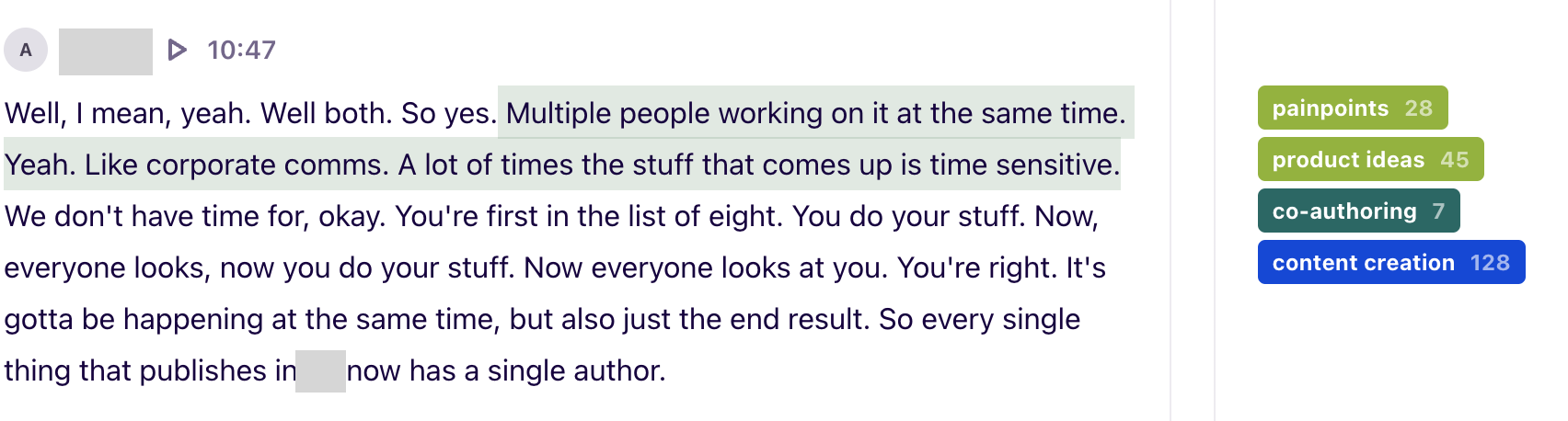
The use cases of co-authoring may differ but the foundations remain consistent.
In the meantime, the engineering team confirmed that the live co-authoring function would not be available for the initial release. Additionally, they planned to implement an open-source rich text editor, TinyMCE, instead of building the authoring tool from the ground up.
Given the absence of live co-authoring, I began considering alternative ways to introduce the co-authoring tool.
I continued to iterate on potential solutions to tackle this challenge,
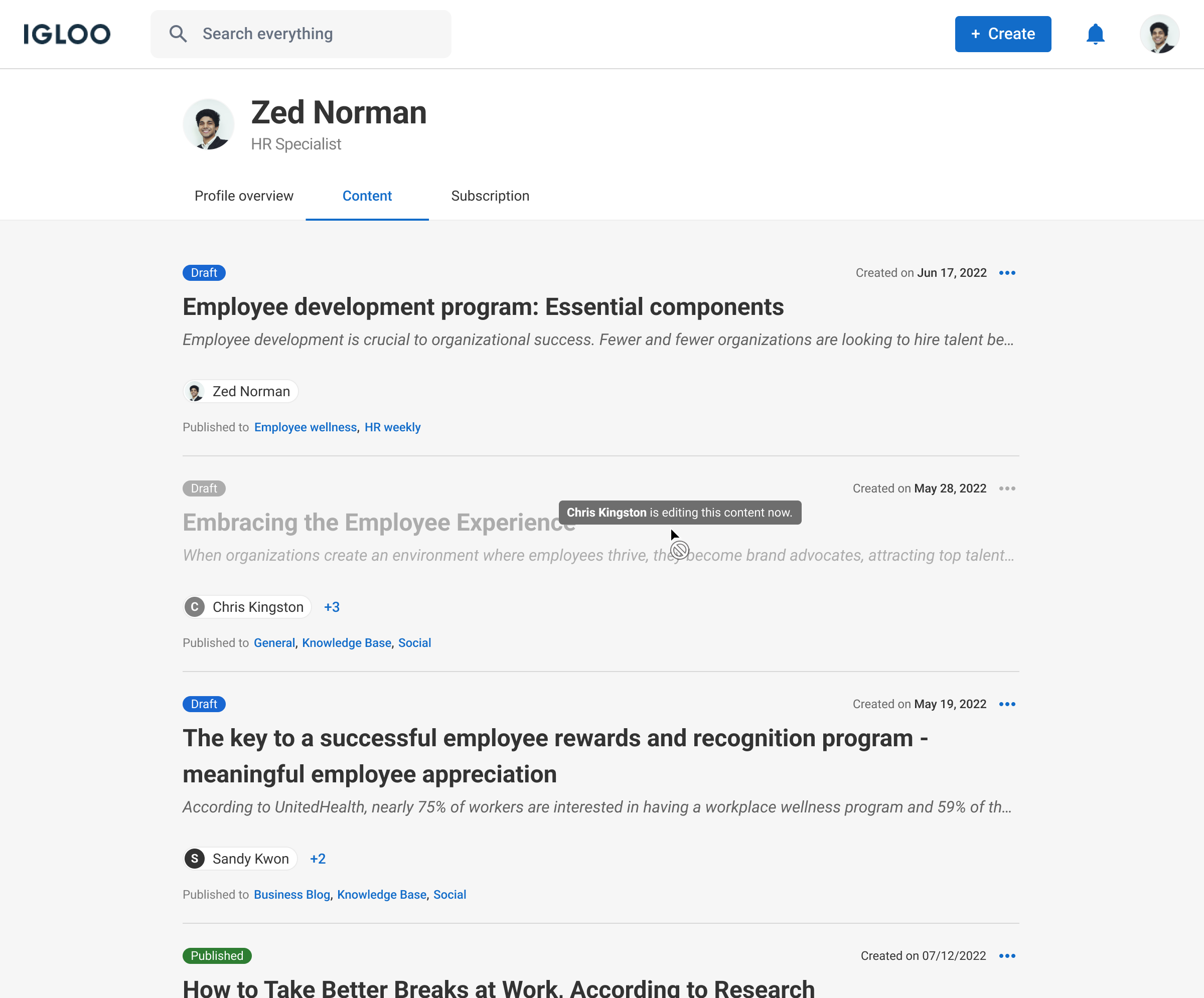
Content creation is set to launch with the new platform in the initial release. The metrics I will be monitoring to gain a understanding include:
The second stage of content authoring will prioritize the implementation of synchronous content collaboration, catering to the more intricate use cases typically encountered by larger enterprise customers.